Longshan Temple: guided visit
Viator
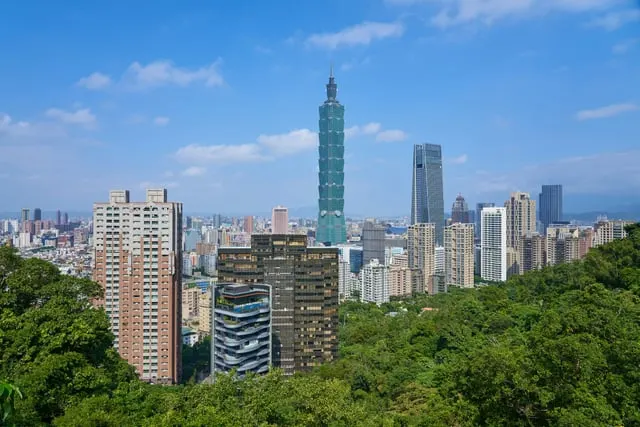
Taipei is a compact, easygoing capital where glass towers rise beside temples, old shopfronts and busy night markets. Ride the metro to Taipei 101, the National Palace Museum and the hot-spring district of Beitou, then float up into the tea hills on the Maokong Gondola. Day trips by train reach Jiufen and Tamsui in about an hour.
Maps and trail data © OpenStreetMap contributors (ODbL).
We may earn a commission when you book through partner links, at no extra cost to you.
How Troovz stays freeLong weekend · 3 days · 2 adults ·
 1
 2
 3
 4
 5
 6
 7
Tamsui-Xinyi Line + Bannan Line · about 20–26 min
11:26 Xiahai City God Temple · Morning · 15–30 min19–25 min walk
12:00 Ximending · Midday · 90–180 min3–4 min walk
13:33 The Red House · Midday · 30–60 min12–16 min walk
14:15 National Taiwan Museum · Afternoon · 1–2 h18–23 min walk
15:33 Chiang Kai-shek Memorial Hall · Afternoon · 1–2 hTamsui-Xinyi Line · about 19–25 min
16:58 Taipei 101 · Afternoon · 1–2 h22–29 min walk
10:22 44 South Village · Morning · 30–60 min20–26 min walk
11:12 Songshan Cultural and Creative Park · Morning · 1–2 h10–13 min walk
12:22 National Railway Museum · Midday · 90–180 minSongshan-Xindian Line + Bannan Line · about 33–43 min
14:35 Bopiliao Historic Block · Afternoon · 30–60 min5–7 min walk
15:10 Longshan Temple · Afternoon · 30–60 min5–7 min walk
16:00 Huaxi Street Night Market · Afternoon · 45–90 min9–12 min walk
12:09 Maokong Gondola · Midday · 90–180 minWenhu Line + Tamsui-Xinyi Line + Songshan-Xindian Line · about 52–68 min
14:47 Treasure Hill Artist Village · Afternoon · 1–2 hSongshan-Xindian Line · about 35–46 min
17:00 Raohe Street Night Market · Afternoon · 1–2 hFlights, car rental and airport transfers for your trip: 3 days · 1 adult.
We may earn a commission when you book through partner links, at no extra cost to you.
How Troovz stays freeFly from anywhere, to anywhere.
Pick an area, then a place that fits your budget and style.
We may earn a commission when you book through partner links, at no extra cost to you.
How Troovz stays freeUses cookies
Tours and tickets matched to your plan and interests. Tap the heart to save one for Build your own.
We may earn a commission when you book through partner links, at no extra cost to you.
How Troovz stays freeViator
Viator
Viator
Viator
Viator
Viator
GetYourGuide
GetYourGuide
Tours, day trips and more on Viator
Browse all toursOpen to visitors, with a few customs.
Temples
Temples are usually open to visitors, though inner shrines are often reserved for worshippers. Visitors are usually asked to dress modestly, with shoulders and knees covered, and to take their shoes off where asked, usually before prayer halls. Visitors usually keep their voices down and a respectful distance from altars and offerings, and photographing people praying usually needs their permission first. Rules can vary, so please follow any instructions and ask the staff on arrival.
What to sort before your 3-day trip, plus a few useful words.
We may earn a commission when you book through partner links, at no extra cost to you.
How Troovz stays freePlug type A, B
110 V, 60 Hz
Mobile data for your trip. Set it up before you fly.
per plan, one phone
See plans(opens in a new tab)Leave your bags for a few hours or a day.
per bag a day
Find storage(opens in a new tab)Tap to hear.
Places to eat near your plan and your stay. Tap the heart to save one.
Chosen from places featured in respected travel and food guides, or on a halal certifier's list, as of October 2026. We don't take payment to include a place.
Please confirm with the restaurant if you have any allergies.
 11 min from Xiahai City God Temple
Braised beef noodle soup · Wanhua & Dadaocheng
Price level$
Sources
Price level: Source: MICHELIN Guide, checked Oct 2026
 22 min from Ximending
Braised beef noodle soup · Ximending & Zhongzheng
Price level$
Sources
Price level: Source: MICHELIN Guide, checked Oct 2026
 32 min from Longshan Temple
Squid thick soup · Wanhua & Dadaocheng
Price level$
Sources
Price level: Source: foodpanda Taiwan, checked Oct 2026
 46 min from Treasure Hill Artist Village
Scallion pancake · Da'an & Gongguan
Price level$
Sources
Price level: Source: MICHELIN Guide, checked Oct 2026
 56 min from Bopiliao Historic Block
Large fried chicken cutlet · Ximending & Zhongzheng
Price level$
Halal-certified
Sources
Halal-certified: Listed as halal-certified by Chinese Muslim Association. Please confirm locally.
Price level: Source: foodpanda Taiwan, checked Oct 2026
 67 min from Taipei 101
Butter chicken curry · Xinyi
Price level$
Halal options
Sources
Halal options: Halal options available. Source: the restaurant's own menu. Please confirm locally.
Price level: Source: Khana Khazana, checked Oct 2026
No places near your plan with this option
 18
White-cut free-range chicken · Beitou & Yangmingshan
Price level$
Vegetarian options
Sources
Vegetarian options: Source: the restaurant's own menu
Price level: Source: 28616261.com.tw, checked Oct 2026
 19Typical Ginger tea-oil chicken
Ginger tea-oil chicken · Wenshan & Maokong
Price level$
Vegan optionsVegetarian options
Sources
Vegan options: Source: the restaurant's own menu
Vegetarian options: Source: the restaurant's own menu
Price level: Source: yytea.com.tw, checked Oct 2026
 20
Seafood congee with milkfish slices · Zhongshan & Songshan
Price level$
Sources
Price level: Source: TVBS Supertaste, checked Oct 2026
 21
Cold sesame noodles · Shilin & Tianmu
Price level$
Sources
Price level: Source: cutaway.com.tw, checked Oct 2026
 22Typical Crab-roe noodles
Crab-roe noodles · Ximending & Zhongzheng
Price level$
Sources
Price level: Source: Marie Claire Taiwan, checked Oct 2026
 23
Silky tofu pudding with tapioca pearls and peanut brittle · Da'an & Gongguan
Price level$
Sources
Price level: Source: ETtoday Travel, checked Oct 2026
Green escapes and the sea, a short trip from the centre. Planning information only.


One card for most rides on public transport. Airport routes are in Flights.
A one-trip ticket for the Taipei Metro, priced by distance and valid on the day of issue. At station machines it comes as a blue plastic token or as a QR ticket, and you can also buy a QR ticket in the Go! Taipei Metro app. Station machines take cash only for these tickets.
Per person, paid locally · as of October 2026
Your 3-day plan usesTram and metro
Taxis in Taipei run on a meter, and the fare starts at a flat amount and rises with distance and with slow traffic. A night surcharge applies late in the evening and early morning, and a holiday surcharge is added around Lunar New Year. It helps to have your destination written in Chinese characters, and ride apps such as Uber and Taiwan Taxi are alternatives for hailing a car.
Typical costs, and how to pay.
Excluding your stay.
| Per person, per day | Budget | Mid-range | Comfort |
|---|---|---|---|
| Breakfast | TWD 146 | TWD 158 | TWD 775 |
| Lunch | TWD 122 | TWD 241 | TWD 335 |
| Dinner | TWD 241 | TWD 335 | TWD 1,705 |
| Drinks | TWD 70 | TWD 193 | TWD 312 |
| Getting around | TWD 180 | TWD 180 | TWD 360 |
| Sights (entry tickets) | TWD 453 | TWD 453 | TWD 453 |
| Total a day | TWD 1,212 | TWD 1,560 | TWD 3,940 |
Sights are counted at the standard entry ticket. Guided tours cost more.
Typical prices, as of October 2026
Credit cards, especially Visa and Mastercard, are accepted by most hotels and by shops in Taipei and other cities, and you can tap a contactless card or phone at metro gates. A little cash is still useful in smaller places and outside the cities.
ATMs run by banks are usually cheaper than stand-alone machines, though many banks also charge foreign cards a fee. If asked, choose to be charged in New Taiwan Dollar. Your own bank may also charge a foreign-use fee. Check with your bank before you go.
Tipping is not expected in Taipei. Many restaurants add a service charge of about 10 percent to the bill, taxi fares are usually just rounded up, and a small tip is polite for porters at better hotels.
Wanhua & Dadaocheng
Seasons, weather, and the events and holidays that change opening hours, crowds and prices.
Quick answers to common questions.
Plan on three to four days for the main sights, and more if you add day trips by train. Allow about 60 to 120 minutes for the observatory of the tallest tower in the city, 120 to 240 minutes for the National Palace Museum and 90 to 180 minutes for the Maokong Gondola and its tea hills.
Taipei is humid and warm for much of the year, with spring rains, thunderstorms in summer and a typhoon season that runs into early autumn. October and November are usually the most comfortable and driest stretch, while winters are short, cool and damp. Local school holidays make July and August busy, and Lunar New Year brings crowds and some closures. As of 29 Oct 2026.
Rain can fall in any month, and summers are long, hot and humid with afternoon thunderstorms. The plum rains arrive in late spring, typhoons are most likely from mid-summer to early autumn, and winter days are cool, damp and often grey. Carry a light rain jacket year-round and plan indoor stops such as museums for wet afternoons. As of 29 Oct 2026.
The metro is the easiest way to move between districts: adult fares run from TWD 20 to TWD 65 per journey. A one-day pass costs TWD 150 and a metro pass valid for a full day from the first tap TWD 180. Taxis run on a meter, and Uber and a local taxi app also work in the city. As of 29 Oct 2026.
It is not required, but an EasyCard is the usual way to pay for the metro, buses and many convenience stores. The card itself costs TWD 100, and you add stored value at stations and shops. A contactless bank card or phone also opens the metro gates, so a short visit can do without one. As of 29 Oct 2026.
Taxis charge a flag-fall of TWD 85 for the first part of the ride, then a small amount for each further stretch, so a ride of about five kilometres in the daytime usually costs about TWD 180. Extra charges apply at night and in slow traffic. Uber is a common alternative with a fare shown before you book. As of 29 Oct 2026.
Tipping is not expected. Many sit-down restaurants add a service charge of about 10 percent to the bill, so check it before adding anything, and taxi fares are usually just rounded up. A small tip is polite for porters at better hotels and for private guides. As of 29 Oct 2026.
Cards are accepted by most hotels, department stores and many restaurants, and metro gates take a contactless card or phone. Small eateries, street stalls and night markets often take cash only, so carry some. Cash machines are easy to find, including inside convenience stores; if one offers to charge you in your home currency, choose Taiwan dollars. As of 29 Oct 2026.
Taiwan uses 110 volts at 60 hertz, with the flat two-pin and grounded three-pin plugs that are also common in North America. Many phone and laptop chargers accept this voltage, but visitors from Europe or the United Kingdom will need an adapter and should check that their devices accept this supply.
Mandarin Chinese is the everyday language, and Taiwanese Hokkien and Hakka are also heard. Metro signs and announcements are in English as well as Chinese, and many younger people and hotel staff know basic English. In small local eateries a translation app or pointing at the menu usually works.
Compared with many big cities it is good value, and much of the sightseeing is free. Metro rides start at TWD 20, the National Palace Museum costs TWD 350 for an adult and the observatory of the tallest tower TWD 600. Temples, night markets and many parks charge no entry. As of 29 Oct 2026.
Walking and temples are the main free pleasures. Entry is free at Longshan Temple, Bao'an Temple, the Taipei Confucius Temple, Da'an Forest Park, Bopiliao Historical Block and the Lin An Tai Historical House, and the night markets charge nothing to walk through. The Presidential Office Building also offers visits at no charge on set days with photo identification. As of 29 Oct 2026.
Tamsui is about 37 minutes by metro, Houtong Cat Village about 52 to 60 minutes by train, and Jiufen about 60 to 80 minutes by train and bus. Shifen and Pingxi, on the Pingxi railway line, take longer, so give them most of a day. As of 29 Oct 2026.
The observatory ticket for an adult costs TWD 600. Allow about 60 to 120 minutes for the visit, and choose a clear day for the views. Elephant Mountain, a short climb from the same district,, gives a free skyline view as an alternative. As of 29 Oct 2026.
Yes, in a small number of places. Each restaurant page says where its halal listing comes from: a certifier named on the page, a halal guide, or the restaurant's own menu. Wording differs by place, so read the label on each page, and please confirm locally with the restaurant before you go, especially for hours and ingredients. As of 29 Oct 2026.
They are a big part of the city's street life, with small snack stalls and games, and usually fill from the late afternoon. Shilin is the largest and Raohe and Ningxia are easier to combine with temples and old streets. Allow about 90 to 180 minutes at Shilin, and carry some cash because many stalls do not take cards.
Access varies by place, so check each page. The operators of the National Palace Museum, the National Taiwan Museum, Chiang Kai-shek Memorial Hall, MoCA Taipei and the Maokong Gondola describe lifts or step-free routes, while many temples, night markets and older streets have steps and crowds. The metro has lifts at stations, though some routes between exits are long. As of 29 Oct 2026.
Rules for entering Taiwan depend on your nationality and can change. Check your government's official travel advisory before you go.
Average highAverage lowRainy days
Typical, based on past years. Not a forecast.
| Month | Average high | Average low | Rainy days |
|---|---|---|---|
| January | 17° | 12° | 17 days |
| January is cool, damp and often grey, with fog and drizzle blown in by north-east winds, and the coldest spells of the year usually arrive now. The Lunar New Year market on Dihua Street usually opens in the weeks before the holiday, and cherry blossom starts on Yangmingshan. | |||
| February | 18° | 12° | 15 days |
| February is cool and damp, one of the greyest stretches of the year, with drizzle and little sunshine. Lunar New Year and the Lantern Festival usually fall in January or February, and the Yangmingshan flower festival and Pingxi sky lanterns belong to this season. | |||
| March | 21° | 14° | 16 days |
| March warms slowly but stays damp, with showers becoming more frequent as spring goes on. Calla lilies and azaleas bloom around Yangmingshan and the city parks, and the 228 Peace Memorial Day weekend usually falls at the end of February or the start of March. | |||
| April | 24° | 17° | 18 days |
| April is mild to warm with frequent showers and humid air. The Children's Day and Tomb Sweeping Day holidays give a long weekend in early April, and the Baosheng Cultural Festival at Dalongdong usually runs from April into May. | |||
| May | 27° | 21° | 21 days |
| May turns warm and humid, and the plum rains, short and sometimes heavy fronts, usually begin around the middle of the month. Typhoons can start to affect the island from this month, and hydrangeas follow the calla lilies on Yangmingshan. | |||
| June | 30° | 23° | 21 days |
| June is hot and humid, with plum rains early in the month and strong thunderstorms later. Dragon Boat Festival, on 9 June in 2027, brings boat races on the Keelung River at Dajia Riverside Park, and the Taipei Film Festival usually starts in late June. | |||
| July | 32° | 25° | 20 days |
| July is the hottest month and has fewer rainy days than the months either side, though hot afternoons often end in thunderstorms. School holidays begin, so attractions are busier, and the typhoon season is under way. | |||
| August | 31° | 25° | 22 days |
| August is hot, humid and wet, and typhoons are most likely in this month and September. Ghost Month usually falls in August or September, and the Dadaocheng Summer Festival with its riverside fireworks usually runs in August. | |||
| September | 29° | 23° | 18 days |
| September stays hot and humid and is still one of the wettest months, with typhoons possible. Mid-Autumn Festival, on 15 September in 2027, is the main holiday, and the Taipei Arts Festival and the Fringe usually take place around the end of summer. | |||
| October | 25° | 20° | 18 days |
| October brings cooler, less humid air and rain that eases through the month, although a late typhoon is still possible. National Day on 10 October gives a long weekend, and the Pride parade and Nuit Blanche usually take place at the end of the month. | |||
| November | 22° | 17° | 17 days |
| November is among the driest and most comfortable months, with mild days and clearer skies, which is why many guides point to autumn for exploring on foot. The Golden Horse film festival, the Shilin chrysanthemum display and the start of Christmasland in New Taipei usually fall in this month. | |||
| December | 19° | 14° | 18 days |
| December turns cool and damp again as the north-east winds return, with fog and drizzle common. Christmasland in New Taipei and the New Year countdown near Taipei 101 draw evening crowds, and the Taipei Marathon is usually held on the third weekend. | |||
Mar · Apr · May
Spring warms up gradually, but March and April are still damp and often grey, and the plum rains usually arrive from about mid May. Flower festivals on Yangmingshan, the Tomb Sweeping long weekend and temple celebrations fill the calendar.
Jun · Jul · Aug
Summer is hot, humid and wet, with afternoon thunderstorms and the start of the typhoon season. Dragon boat races, school-holiday crowds, Ghost Month and riverside fireworks at Dadaocheng shape the season, and September stays summery.
Sep · Oct · Nov
Autumn begins hot and stormy in September, then turns drier and more comfortable through October and November, the months many guides suggest for a first visit. Mid-Autumn, National Day, the Pride parade and the Golden Horse film festival all fall in this season.
Dec · Jan · Feb
Winter is cool, damp and grey, with fog and drizzle blown in on north-east winds and the odd cold spell, though it rarely feels severe. Christmas lights, the New Year countdown, Lunar New Year and the Lantern Festival keep the city busy, and it is also the season for hot springs and early cherry blossom.
Coming up in the next 12 months. to see what falls during your trip.
Chinese-language and international films are shown at cinemas across the city, and the awards ceremony closes the festival. Book tickets early for popular screenings.
Talks and discussions with writers and translators run for about two weeks. Most sessions are in Chinese, so check each programme for language.
The light displays are in Banqiao, a short rail or metro ride from central Taipei, and evenings are the busiest time.