Bukchon Hanok Village: entry ticket
Viator
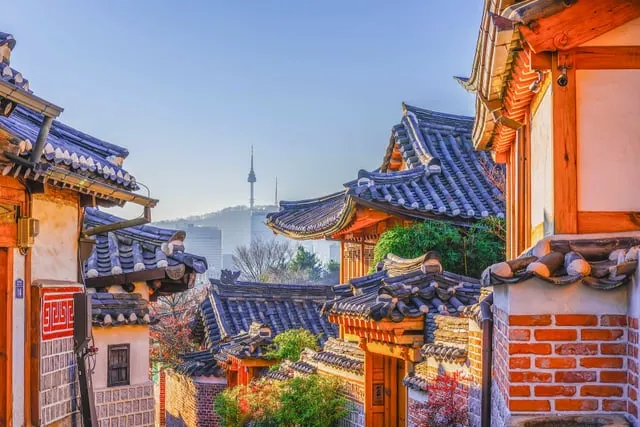
Seoul is a Korean capital where royal palaces and old city walls stand beside glowing shopping streets and modern towers. Ride the fast subway between traditional lanes, busy markets and riverside parks, and eat well at every turn.
Maps and trail data © OpenStreetMap contributors (ODbL).
Long weekend · 3 days · 2 adults ·
 1
 2
 3
 4
 5
 6
Tram or metro · about 15–20 min
10:50 Gyeongbokgung Palace · Morning · 90–150 min18–23 min walk
12:38 Bukchon Hanok Village · Midday · 1–2 h18–23 min walk
13:56 Changdeokgung Palace · Midday · 90–150 min15–20 min walk
15:41 Ikseon-dong · Afternoon · 45–90 minTram or metro · about 26–34 min
17:00 N Seoul Tower · Afternoon · 1–2 hTram or metro · about 20–26 min
10:56 War Memorial of Korea · Morning · 3 h20–26 min walk
14:16 Itaewon · Afternoon · 90–180 minTram or metro · about 39–51 min
16:37 Starfield Library · Afternoon · 20–45 min15–20 min walk
10:00 Seoul Museum of Art · Morning · 1–2 h8–10 min walk
11:08 Deoksugung Palace · Morning · 60–90 min10–13 min walk
12:18 Cheonggyecheon Stream · Midday · 45–120 min6–8 min walk
13:09 Gwanghwamun Square · Midday · 30–60 min9–12 min walk
13:48 Jogyesa Temple · Midday · 30–60 min9–12 min walk
14:27 Unhyeongung Palace · Afternoon · 45–75 min5–7 min walk
15:17 Seoul Museum of Craft Art · Afternoon · 1–2 h11–14 min walk
16:28 National Folk Museum of Korea · Afternoon · 90–150 minFlights, car rental and airport transfers for your trip: 3 days · 1 adult.
We may earn a commission when you book through partner links, at no extra cost to you.
How Troovz stays freeFly from anywhere, to anywhere.
Pick an area, then a place that fits your budget and style.
We may earn a commission when you book through partner links, at no extra cost to you.
How Troovz stays freeUses cookies
Tours and tickets matched to your plan and interests. Tap the heart to save one for Build your own.
We may earn a commission when you book through partner links, at no extra cost to you.
How Troovz stays freeViator
Viator
Viator
Viator
Viator
Viator
Viator
Viator
Tours, day trips and more on Viator
Browse all toursOpen to visitors, with a few customs.
Temples
Temples are usually open to visitors, though inner shrines are often reserved for worshippers. Visitors are usually asked to dress modestly, with shoulders and knees covered, and to take their shoes off where asked, usually before prayer halls. Visitors usually keep their voices down and a respectful distance from altars and offerings, and photographing people praying usually needs their permission first. Rules can vary, so please follow any instructions and ask the staff on arrival.
What to sort before your 3-day trip, plus a few useful words.
We may earn a commission when you book through partner links, at no extra cost to you.
How Troovz stays freePlug type C, F
220 V, 60 Hz
Mobile data for your trip. Set it up before you fly.
per plan, one phone
See plans(opens in a new tab)Leave your bags for a few hours or a day.
per bag a day
Find storage(opens in a new tab)Tap to hear.
Places to eat near your plan and your stay. Tap the heart to save one.
Chosen from places featured in respected travel and food guides, or on a halal certifier's list, as of October 2026. We don't take payment to include a place.
Please confirm with the restaurant if you have any allergies.
 14 min from National Folk Museum of Korea
Sagol kalguksu (beef-bone knife-cut noodle soup) · Jongno & the Palaces
Price level$$
Sources
Price level: Source: Taste Korean Food, checked Oct 2026
 24 min from Jogyesa Temple
Seolleongtang · Jongno & the Palaces
Price level$$
Sources
Price level: Source: Taste Korean Food, checked Oct 2026
 37 min from National Folk Museum of KoreaTypical Sujebi
Sujebi (hand-pulled dough soup) · Jongno & the Palaces
Price level$
Sources
Price level: Source: Visit Seoul, checked Oct 2026
 48 min from Gyeongbokgung Palace
Samgyetang (ginseng chicken soup) · Jongno & the Palaces
Price level$$
Sources
Price level: Source: Taste Korean Food, checked Oct 2026
 59 min from Itaewon
Chicken shish kebab · Itaewon & Yongsan
Price level$$
Halal-certified
Sources
Halal-certified: Listed as halal-certified by Korea Muslim Federation. Please confirm locally.
Price level: Source: Shuttle Delivery - Kervan Express menu page, checked Oct 2026
 610 min from Starfield Library
Hand-drip coffee with pecan pie · Gangnam & Apgujeong
Price level$
Sources
Price level: Source: Eatbook - 26 Katong and Joo Chiat food places, checked Oct 2026
No places near your plan with this option
 10
Bibim-guksu (spicy cold wheat noodles) · Myeongdong & Namdaemun
Price level$$
Sources
Price level: Source: Taste Korean Food, checked Oct 2026
 11
Bassak bulgogi (thin-sliced, open-flame beef bulgogi) · Yeouido & the Han River
Price level$$
Sources
Price level: Source: MICHELIN Guide, checked Oct 2026
 12
Pyeongyang-style cold buckwheat noodles in beef broth · Gangnam & Apgujeong
Price level$$
Sources
Price level: Source: Korea on a Plate - Hapjeongok, checked Oct 2026
 13
Gomtang (beef bone soup with rice) · Myeongdong & Namdaemun
Price level$$
Sources
Price level: Source: Taste Korean Food, checked Oct 2026
 14
Mul naengmyeon (cold noodles in beef bone broth) · Jamsil & Songpa
Price level$
Sources
Price level: Source: Visit Seoul, checked Oct 2026
 15
Kong-guksu (cold soybean noodle soup) · Yeouido & the Han River
Price level$
Sources
Price level: Source: Time Out, checked Oct 2026
Green escapes and the sea, a short trip from the centre. Planning information only.

Free entry

Free entry

Free entry

Free entry

About KRW 5,000

Free entry
One card for most rides on public transport. Airport routes are in Flights.
A rechargeable contactless card that works on the metro and city buses, and in many shops and taxis. Touch it on the reader when you enter and again when you leave, and the fare comes off your balance. Fares typically start at KRW 1,550 and rise with distance, and a transfer within 30 minutes usually carries a discount.
Per person, paid locally · as of October 2026
Your 3-day plan usesTram and metro
Taxis run on a meter at city-set rates, with a night surcharge of 20 to 40 percent between 22:00 and 04:00 for regular taxis. Deluxe taxis have a higher start fare. Card payment is usually accepted, and rides from the airport can use fixed zone fares that include tolls.
Typical costs, and how to pay.
Excluding your stay.
| Per person, per day | Budget | Mid-range | Comfort |
|---|---|---|---|
| Breakfast | KRW 9,925 | KRW 11,180 | KRW 20,167 |
| Lunch | KRW 7,680 | KRW 10,711 | KRW 21,143 |
| Dinner | KRW 10,711 | KRW 21,143 | KRW 350,000 |
| Drinks | KRW 4,610 | KRW 6,440 | KRW 6,440 |
| Getting around | KRW 5,000 | KRW 5,000 | KRW 12,400 |
| Sights (entry tickets) | KRW 2,333 | KRW 2,333 | KRW 2,333 |
| Total a day | KRW 40,259 | KRW 56,807 | KRW 412,483 |
Sights are counted at the standard entry ticket. Guided tours cost more.
Typical prices, as of October 2026
Cards, including contactless, are widely used in Seoul shops, restaurants, cafes and convenience stores. A little cash in won is still handy for traditional markets, street food stalls and some taxis.
ATMs run by banks are usually cheaper than stand-alone machines, though many banks also charge foreign cards a fee. If asked, choose to be charged in South Korean Won. Your own bank may also charge a foreign-use fee. Check with your bank before you go.
Tipping is not customary in Seoul, and menu prices usually already include everything. You do not need to tip in restaurants, cafes or taxis, though some upscale hotels and restaurants add a service charge to the bill.
Jongno & the Palaces
Seasons, weather, and the events and holidays that change opening hours, crowds and prices.
Quick answers to common questions.
Plan on three to five days for the main sights. Allow about 90 to 150 minutes for Gyeongbokgung Palace, and a long half day for the National Museum of Korea, which is large. The palaces, the hanok lanes and the markets sit close together in the old centre, while Gangnam and Jamsil are further out and need their own time. As of 26 Oct 2026.
Spring and autumn are the usual favourites, with mild weather and cherry blossom or autumn colour. Summers are hot, humid and wet, and winters are cold and mostly dry. The busiest periods are usually the summer months and the Lunar New Year and Chuseok holiday weeks, so book rooms early for those. Check the month-by-month notes on this page before you choose your dates. As of 26 Oct 2026.
The metro and city buses share one fare system. A metro ride starts at KRW 1,550 with a rechargeable card, and the fare rises with distance. Buy a T-money card at a convenience store or station machine and top it up, then tap it on the gate or bus reader. A single-journey paper ticket costs a little more and carries a refundable deposit. As of 26 Oct 2026.
Yes. The Climate Card gives unlimited rides on the metro and city buses for a set number of days; a one-day pass costs KRW 5,000, plus a one-off card price of KRW 3,000 for the physical card. A T-money card, at KRW 3,000, suits visitors who prefer to pay per ride. Check where each card is sold before you buy. As of 26 Oct 2026.
The metro is the backbone and reaches most sights, with a ride starting at KRW 1,550. City buses and taxis cover the rest. A short regular taxi ride of about two kilometres costs around KRW 5,100 in the daytime, and ride apps such as Kakao T and Uber work with licensed taxis. Use the metro for longer hops between areas. As of 26 Oct 2026.
Regular taxis run on the meter. The fare starts at KRW 4,800 for the first stretch, then rises in small steps with distance and with time spent in traffic, and a night surcharge applies late in the evening and overnight. Fixed zone fares apply from Incheon Airport, starting from KRW 70,000 for a medium taxi. As of 26 Oct 2026.
No. Tipping is not customary in restaurants, cafes, taxis or hotels. Saying thank you is enough. As of 26 Oct 2026.
Cards, including contactless cards, are widely accepted in shops, restaurants, cafes and convenience stores. Cash is still handy for small market stalls and street food. For cash machines, look for those marked as global or showing international card logos, which are common at convenience stores and station concourses. As of 26 Oct 2026.
South Korea uses 220 V at 60 Hz, with plug types C and F, the two-round-pin sockets. Many phone and laptop chargers accept this voltage, but visitors from countries with different sockets will need a plug adapter. Check the label on each charger. As of 26 Oct 2026.
Korean is the everyday language. English is easier to use in hotels and central tourist areas than in small local restaurants. The latest EF English Proficiency Index ranks South Korea number 48 of the countries and regions it covers. A translation app helps in smaller places. As of 26 Oct 2026.
It can be good value. A metro ride starts at KRW 1,550, a one-day Climate Card for the metro and buses costs KRW 5,000, and a short regular taxi ride of about two kilometres is around KRW 5,100 in the daytime. Many sights, including several palaces, parks and open streets, are free or low-cost, and each sight's page shows what is known about its entry. Meals, transport and sights are usually modest in price, while hotels in central areas cost more. As of 26 Oct 2026.
Yes, in most cases. The standard value-added tax rate is 10 percent and it is normally already included in the price shown in shops, restaurants and for tickets, so the price on the menu or tag is the price you pay. As of 26 Oct 2026.
Walking is the main free pleasure: Gwanghwamun Square, the Cheonggyecheon stream walk, Insadong and the lanes of Ikseon-dong are open public spaces, and the Seoullo skygarden walkway is free to enter. Several museums, including the National Museum of Korea, are free for their permanent exhibitions. Check each page before you go. As of 26 Oct 2026.
Nami Island, the Suwon Hwaseong Fortress and the guided tours to the DMZ are the most popular. Suwon is about 30 to 30 minutes from central Seoul by train or metro, and Nami Island takes about 60 to 70 minutes. Everland, a large theme park, is another full-day option. As of 26 Oct 2026.
The Huwon (Secret Garden) at Changdeokgung Palace is visited on guided tours with limited places, so reserve it early for popular dates, and Jongmyo Shrine runs timed guided visits on most weekdays. DMZ tours are run by licensed operators and must be booked in advance, and you will need your passport. Theme-park and observation-deck tickets can be bought online. As of 26 Oct 2026.
Average highAverage lowRainy days
Typical, based on past years. Not a forecast.
| Month | Average high | Average low | Rainy days |
|---|---|---|---|
| January | 2° | -7° | 4 days |
| January is the coldest stretch of the year, but the days are generally sunny and among the driest of the twelve months. Pack a heavy coat, warm layers, gloves and shoes that cope with cold, and expect fewer tourists once the New Year week is over. | |||
| February | 5° | -5° | 4 days |
| February stays cold and mostly dry, with the odd late-winter snowfall and a sharp wind chill, though the air slowly starts to ease. A winter coat and insulating layers still apply, and if the Lunar New Year holiday falls in the month, expect a quiet city and busy intercity travel. | |||
| March | 11° | 0° | 7 days |
| March begins with a winter feel and then warms noticeably as the weeks pass, with chilly mornings and milder afternoons. Long sleeves, a medium jacket and removable layers work well, and shoes that handle puddles help while the last snow melts. | |||
| April | 18° | 6° | 7 days |
| April is when the weather turns pleasant, with mild days, larger gaps between morning and evening and the cherry blossom around the city, usually from the first days of the month. A light jacket and comfortable walking shoes suit it, and the blossom spots such as Yeouido are busy at weekends. | |||
| May | 23° | 12° | 8 days |
| May feels warm and bright, with spring flowers replacing the blossom and dry, sunny days more likely than not. Light tops with a thin layer for the evening are enough, and the long holiday weekends around Children's Day and Buddha's Birthday fill parks and palaces. | |||
| June | 27° | 18° | 9 days |
| June starts warm and fairly comfortable, then turns more humid, and the rainy season usually arrives in the second half. Breathable clothes and a compact umbrella or light rain layer are worth packing, with indoor museums and cafes as backup on wet days. | |||
| July | 28° | 22° | 17 days |
| July is hot, humid and usually the wettest month of the year, with heavy showers that can arrive quickly. Wear very light, quick-drying clothes, carry rain protection and plan indoor stops such as malls and museums for the middle of the day. | |||
| August | 29° | 22° | 16 days |
| August stays hot and sticky, with thunderstorms and the rainy spell easing off as the month goes on. Breathable clothes, sun protection and a rain backup are the basics, and it is a busy month for domestic holidays. | |||
| September | 26° | 17° | 8 days |
| September shakes off the summer rains and becomes far more pleasant, with warm early days that gradually turn drier and milder. Summer clothes early in the month and a light layer later work well, and in some years Chuseok falls in this month, which brings crowds and higher prices. | |||
| October | 20° | 9° | 6 days |
| October is mild and mostly dry with a crispness in the air by the end of the month, and the autumn colours begin to appear. Long sleeves with a light jacket and removable layers suit it, and it is one of the most popular months for walking and hiking. | |||
| November | 12° | 2° | 8 days |
| November turns noticeably colder, with a distinct chill and cold mornings, while it remains one of the drier months. The autumn colours usually peak from late October into early November, so a sweater and a warmer jacket make sense for the parks and mountain trails. | |||
| December | 4° | -5° | 5 days |
| December brings cold, dry and often sunny weather, with freezing temperatures possible. Pack a winter coat, warm layers and gloves; the Christmas lights, the winter lantern display and the skating rink make the evenings lively. | |||
Mar · Apr · May
Spring runs from March to May. It starts chilly and changeable, then brings cherry blossom in April and warm, bright days in May. Layers are the key, since mornings and evenings stay cool well into the season.
Jun · Jul · Aug
Summer runs from June to August. It is hot and humid, with the rainy season usually arriving in the second half of June and July and heavy showers often passing quickly. Light clothes, rain protection and indoor stops for the middle of the day help.
Sep · Oct · Nov
Autumn runs from September to November. After the summer rains the air turns drier and milder, the leaves usually change colour from late October, and November brings a clear chill. It is a popular time for walking and hiking.
Dec · Jan · Feb
Winter runs from December to February. It is cold and mostly dry, with sunny days, the odd snowfall and a sharp wind chill. A warm coat, layers and gloves are needed, and the city is usually calmer outside the holiday weeks.
Coming up in the next 12 months. to see what falls during your trip.
It falls on a Friday in 2026, which makes a long weekend. Seoul is festive rather than shut, but some sights keep holiday hours, so check each venue's own page.
Tens of thousands of people gather at Jonggak to welcome the new year. Wrap up warmly, arrive early, and plan your journey home, as streets and stations near the area are crowded.
It falls on a Friday in 2027. After the midnight celebrations the morning is usually slow, and some sights keep shorter hours, so check ahead.