Food tasting: Shinsekai
Viator
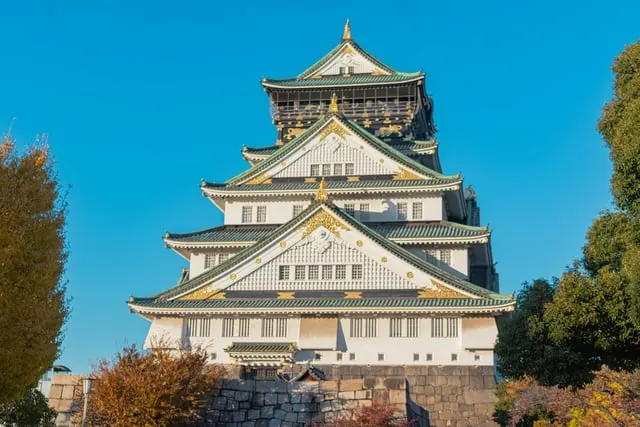
Osaka is Japan's big-hearted food city, where a hilltop castle, neon canals and old shrines sit a short train ride from each other. Eat your way through the markets and street stalls, climb a skyline tower, then use the city as a base for Kyoto, Nara and Kobe.
Maps and trail data © OpenStreetMap contributors (ODbL).
We may earn a commission when you book through partner links, at no extra cost to you.
How Troovz stays freeLong weekend · 3 days · 2 adults ·
 1
 2
 3
 4
 5
 6
 7
 8
 9
 10
16–21 min walk
10:16 Shitennoji · Morning · 45–90 min14–18 min walk
11:15 Tsutenkaku · Morning · 45–90 min9–12 min walk
12:09 Den Den Town (Nipponbashi) · Midday · 1–2 h9–12 min walk
13:18 Sennichimae Doguyasuji · Midday · 20–45 min5–7 min walk
13:43 Kuromon Market · Midday · 45–90 min8–10 min walk
14:36 Hozenji Yokocho · Afternoon · 15–30 min3–4 min walk
14:54 Dotonbori · Afternoon · 30–90 minAbout 9 min by taxi
15:42 Osaka Castle · Afternoon · 1–2 hAbout 14 min by taxi
17:10 Umeda Sky Building · Afternoon · 45–90 minAbout 35 min by taxi
12:10 Universal Studios Japan · Midday · 8–10 hAbout 15 min by taxi
15:40 Osaka Aquarium Kaiyukan · Afternoon · 2–3 hAbout 9 min by taxi
10:18 Nakanoshima · Morning · 45–90 min20–26 min walk
11:23 Nakanoshima Museum of Art, Osaka · Morning · 90–150 minAbout 31 min by taxi
13:55 Expo '70 Commemorative Park · Midday · 2–4 h4–5 min walk
15:59 EXPOCITY and NIFREL · Afternoon · 2–4 hFlights, car rental and airport transfers for your trip: 3 days · 1 adult.
We may earn a commission when you book through partner links, at no extra cost to you.
How Troovz stays freeFly from anywhere, to anywhere.
Pick an area, then a place that fits your budget and style.
We may earn a commission when you book through partner links, at no extra cost to you.
How Troovz stays freeUses cookies
Tours and tickets matched to your plan and interests. Tap the heart to save one for Build your own.
We may earn a commission when you book through partner links, at no extra cost to you.
How Troovz stays freeViator
Viator
Viator
Viator
Viator
GetYourGuide
GetYourGuide
GetYourGuide
Tours, day trips and more on Viator
Browse all toursOpen to visitors, with a few customs.
Temples
Temples are usually open to visitors, though inner shrines are often reserved for worshippers. Visitors are usually asked to dress modestly, with shoulders and knees covered, and to take their shoes off where asked, usually before prayer halls. Visitors usually keep their voices down and a respectful distance from altars and offerings, and photographing people praying usually needs their permission first. Rules can vary, so please follow any instructions and ask the staff on arrival.
What to sort before your 3-day trip, plus a few useful words.
We may earn a commission when you book through partner links, at no extra cost to you.
How Troovz stays freePlug type A, B
100 V, 60 Hz
Mobile data for your trip. Set it up before you fly.
per plan, one phone
See plans(opens in a new tab)Leave your bags for a few hours or a day.
per bag a day
Find storage(opens in a new tab)Tap to hear.
Places to eat near your plan and your stay. Tap the heart to save one.
Chosen from places featured in respected travel and food guides, or on a halal certifier's list, as of October 2026. We don't take payment to include a place.
Please confirm with the restaurant if you have any allergies.
 11 min from Hozenji Yokocho
Omelette rice with chicken ketchup rice · Namba & Dotonbori
Price level$
Sources
Price level: Source: Junkissa American, checked Oct 2026
 21 min from Abeno Harukas
Takoyaki (octopus balls) · Shinsekai & Tennoji
Price level$
Sources
Price level: Source: tsunagu Japan, checked Oct 2026
 31 min from Nakanoshima
Afternoon tea set · Nakanoshima & Kitahama
Price level$$$
Sources
Price level: Source: Mapple web, checked Oct 2026
 41 min from Hozenji Yokocho
Kitsune udon · Namba & Dotonbori
Price level$$
Sources
Price level: Source: Dotonbori Imai, checked Oct 2026
 51 min from Abeno Harukas
Akashiyaki (octopus balls in dashi) · Shinsekai & Tennoji
Price level$
Sources
Price level: Source: Mapple web, checked Oct 2026
 62 min from Nakanoshima
Linzer torte · Nakanoshima & Kitahama
Price level$
Sources
Price level: Source: Time Out, checked Oct 2026
No places near your plan with this option
 24
Beef tendon negiyaki · Umeda & Kita
Price level$$
Sources
Price level: Source: negiyaki-yamamoto.com, checked Oct 2026
 25
Maitake tempura udon · Umeda & Kita
Price level$
Sources
Price level: Source: macaroni, checked Oct 2026
 26
Hiya-ten udon (cold udon with tempura) · Umeda & Kita
Price level$
Sources
Price level: Source: udonbo.co.jp, checked Oct 2026
 27
Original takoyaki (plain, dashi batter) · Shinsekai & Tennoji
Price level$
Sources
Price level: Source: Mapple web, checked Oct 2026
 28
A5 wagyu beef cutlet set · Umeda & Kita
Price level$$$$
Halal options
Sources
Halal options: Listed as halal by Halal Food in Japan. Please confirm locally.
Price level: Source: Savor Japan, checked Oct 2026
 29
Takoyaki (octopus) · Umeda & Kita
Price level$
Sources
Price level: Source: takonotetsu.co.jp, checked Oct 2026
Green escapes and the sea, a short trip from the centre. Planning information only.


One card for most rides on public transport. Airport routes are in Flights.
A rechargeable tap card that works on Osaka Metro, JR trains, private railways and buses across the region, and also pays at shops and vending machines that show the ICOCA mark. You buy it with cash and top it up when the balance runs low. Other major Japanese transit cards, such as Suica and PASMO, are also accepted.
Per person, paid locally · as of October 2026
Your 3-day plan usesTaxi
Taxis in Osaka run on a meter at a regulated tariff, with the doors opened and closed by the driver, so wait for the door to open rather than reaching for it. A night surcharge applies late in the evening, tolls are added on top, and many cars take cards and transport cards, though a little cash helps. It is worth showing your destination written in Japanese on your phone.
Typical costs, and how to pay.
Excluding your stay.
| Per person, per day | Budget | Mid-range | Comfort |
|---|---|---|---|
| Breakfast | JPY 504 | JPY 563 | JPY 4,733 |
| Lunch | JPY 821 | JPY 1,062 | JPY 5,275 |
| Dinner | JPY 1,062 | JPY 5,275 | JPY 9,200 |
| Drinks | JPY 366 | JPY 946 | JPY 1,397 |
| Getting around | JPY 820 | JPY 820 | JPY 3,120 |
| Sights (entry tickets) | JPY 4,250 | JPY 4,250 | JPY 4,250 |
| Total a day | JPY 7,823 | JPY 12,916 | JPY 27,975 |
Sights are counted at the standard entry ticket. Guided tours cost more.
Typical prices, as of October 2026
Cards are widely accepted in hotels, department stores, convenience stores and many restaurants, but not every shop takes contactless payment. Cash is still needed at many small restaurants, temples and shrines, and street food stalls.
ATMs run by banks are usually cheaper than stand-alone machines, though many banks also charge foreign cards a fee. If asked, choose to be charged in Japanese Yen. Your own bank may also charge a foreign-use fee. Check with your bank before you go.
Tipping is not expected in Japan. Some hotels and larger restaurants add a service charge of about 10 percent, and taxi fares are paid as shown on the meter.
Shinsekai & Tennoji
Seasons, weather, and the events and holidays that change opening hours, crowds and prices.
Quick answers to common questions.
Three days covers the main sights, and a fourth lets you add a day trip. Allow about 60 to 120 minutes for Osaka Castle, 45 to 90 minutes for the Umeda Sky Building, 60 to 150 minutes for Shinsekai and 30 to 90 minutes for Dotonbori, plus time for meals, which are a highlight in themselves. As of 28 Oct 2026.
Spring brings cherry blossom, usually from late March into early April, and autumn colour usually arrives in November. Summers are hot and humid, with a rainy season in early summer and typhoons possible from late summer, while winters are mild and often dry. Big festivals such as the Tenjin Matsuri in July draw crowds, so book rooms early for those dates. As of 28 Oct 2026.
Expect hot, humid summers and mild winters. The rainy season is usually from June into July, and typhoons are most likely from August to October. Spring and autumn are comfortable for walking. Monthly notes are on the seasons page. As of 28 Oct 2026.
The Nankai Rapi:t express reaches Namba in about 34 to 40 minutes, and the Rapi:t digital ticket costs JPY 1,410 for a regular seat. The JR Haruka train runs to Tennoji in about 31 minutes and to Shin-Osaka in about 48 minutes. A taxi to the centre is usually a fixed fare, from about JPY 15,400 per car. As of 28 Oct 2026.
It is not required, because many gates also take a contactless bank card, but the rechargeable ICOCA card is handy for trains, subways, buses and some shops. Visitor-design cards are sold at JR-West machines with a refundable deposit of JPY 500. Contactless bank cards cost nothing to set up and are charged the standard adult fare. As of 28 Oct 2026.
The Osaka Metro and JR loop line reach most sights. Osaka Metro adult fares run from JPY 190 to JPY 390 per journey, and the Osaka Metro and City Bus one-day pass costs JPY 820 on weekdays and JPY 620 on weekends and holidays. Taxis start at about JPY 600 on the meter, and the GO and DiDi apps usually work for hailing a licensed taxi. As of 28 Oct 2026.
Osaka is generally good value for Japan, especially for food. Entry to Osaka Castle costs JPY 1,200, the Umeda Sky Building JPY 2,000, Tsutenkaku JPY 1,500 and Tennoji Zoo JPY 800. Osaka Castle Park, Sumiyoshi Taisha and Kuromon Market are free to enter, and consumption tax is 10 percent on most purchases. As of 28 Oct 2026.
No. Tipping is not expected in restaurants, taxis or hotels, and leaving money on the table can cause confusion. Some hotels and larger restaurants add a service charge to the bill, so check the bill before paying. As of 28 Oct 2026.
Cards and phones are accepted in hotels, department stores, convenience stores and many restaurants, but small shops, market stalls, shrines and some street-food stands still prefer cash. Cash machines in convenience stores and post offices usually accept foreign cards. Ask your own bank about fees before you travel. As of 28 Oct 2026.
Japan uses 100 volts, and Osaka runs at 60 hertz, with type A and type B sockets. Most phone and laptop chargers cope with the lower voltage, but visitors with other plug shapes need an adapter. Check the label on each charger before you plug it in. As of 28 Oct 2026.
Japanese is the everyday language. English is common in major attractions, large hotels and stations, but less so in small restaurants and shops. Osaka scores 460 on the latest EF English Proficiency Index, against a global average of 488. A translation app and a few Japanese phrases help a lot. As of 28 Oct 2026.
Yes, in a small number of places. Each restaurant page says where its halal listing comes from: a halal guide or the restaurant's own menu. Wording differs by place, so read the label on each page and confirm locally with the restaurant before you go, especially for hours and ingredients. As of 28 Oct 2026.
Plenty of the most popular places cost nothing to enter. Walk through Osaka Castle Park, browse the stalls of Kuromon Market, visit Sumiyoshi Taisha and Namba Yasaka Shrine, stroll Tennoji Park and Tsuruhashi Koreatown, and see the neon of Dotonbori from the canal bridges. Some museums are free on set days, so check before you go. As of 28 Oct 2026.
Kyoto is about 45 minutes by train from Umeda, Nara about 40 minutes from Namba, Kobe about 20 to 30 minutes, and Himeji Castle 30 to 60 minutes depending on the train. Minoh Park is about 30 minutes away, and the temple town of Koyasan about 90 minutes by train and cable car. As of 28 Oct 2026.
The Umeda Sky Building observatory costs JPY 2,000 for an adult, and Tsutenkaku in Shinsekai costs JPY 1,500. Osaka Castle's main tower costs JPY 1,200. Prices and opening hours can change, so check the operator before you go. As of 28 Oct 2026.
Yes. Osaka charges a small lodging tax per person per night that depends on the room rate, and it is usually paid at the hotel with the room charge. The middle band is JPY 200 per person per night, and the lowest-priced rooms pay nothing. As of 28 Oct 2026.
It is possible if you have enough time, because the Nankai Rapi:t reaches Namba in about 34 minutes. A free shuttle runs between the two terminals and takes about 7 to 11 minutes. Leave generous time for immigration and for the return trip before check-in closes. As of 28 Oct 2026.
Rules for entering Japan depend on your nationality and can change. Check your government's official travel advisory before you go.
Average highAverage lowRainy days
Typical, based on past years. Not a forecast.
| Month | Average high | Average low | Rainy days |
|---|---|---|---|
| January | 9° | 2° | 7 days |
| January is the coldest month, with dry, often sunny days and now and then a cold, windy spell, so a warm coat, scarf and gloves are needed. The first three days are the New Year holiday, when many shops close and Sumiyoshi Taisha fills with visitors, and Toka Ebisu draws crowds to Imamiya Ebisu Shrine from 9 to 11 January. | |||
| February | 10° | 2° | 8 days |
| February feels much like January, cold and mostly dry, with plum blossom starting in Osaka Castle Park. Setsubun on 3 February brings bean-throwing rituals at shrines and temples, and the Osaka Marathon takes over the central streets on Sunday 28 February 2027. | |||
| March | 14° | 5° | 12 days |
| March brings the first real warmth, though cold snaps still come, so layers that are easy to take off work best. The spring sumo tournament is usually held in the middle of the month, and the first cherry blossoms can open in the last days of March. | |||
| April | 19° | 10° | 11 days |
| April is mild and is the main month for cherry blossom, which usually lasts only one to two weeks from late March to early April. Showers are frequent, and the Mint cherry blossom walk usually follows in the middle of the month. Golden Week starts at the end of the month. | |||
| May | 24° | 15° | 11 days |
| May is warm and fresh before the rainy season, with sunny days that can reach the late 20s and cooler evenings. Golden Week (29 April to 5 May in 2027) is one of the busiest travel periods of the year, with crowded trains and attractions and many people on the move. | |||
| June | 27° | 20° | 14 days |
| June is the start of the rainy season (tsuyu), with cloudy skies, frequent rain and high humidity, though it does not rain every day. Hydrangeas and irises are in flower, and the Aizen Matsuri begins on 30 June. | |||
| July | 31° | 24° | 16 days |
| July keeps the rain until about the middle of the month, then turns hotter and sunnier, with high humidity throughout. Tenjin Matsuri on 24 and 25 July is the biggest festival of the year and fills the riverbanks, and Sumiyoshi Matsuri follows from 30 July. | |||
| August | 33° | 25° | 14 days |
| August is the hottest and most humid month, and typhoons can reach Osaka, so plan indoor sights for the middle of the day and keep a flexible schedule. Obon in mid August brings a short holiday period and busy trains, and fireworks displays are held across the area. | |||
| September | 29° | 21° | 13 days |
| September stays hot and humid at first and turns cooler towards the end of the month, and it is a month when typhoons may disrupt travel. The Kishiwada Danjiri festival begins in the middle of the month, and moon-viewing events are held in the evenings. | |||
| October | 23° | 15° | 10 days |
| October is warm in the day and cool at night, with plenty of sunny days and usually less rain than the summer months, though a late typhoon is still possible. The second round of the Kishiwada Danjiri festival is held at the start of the month, and the Sports Day holiday falls on 11 October in 2027. | |||
| November | 17° | 9° | 8 days |
| November is the usual peak for autumn colour, with maple, ginkgo and zelkova turning in Osaka Castle Park and along Midosuji, and cool, mostly sunny days. The Midosuji illumination starts on 3 November and the Osaka Castle illumination on 20 November in 2026. | |||
| December | 11° | 4° | 7 days |
| December is cold but often sunny and the driest stretch of the year, with nights near freezing late in the month. Winter lights run along Midosuji and in Nakanoshima, and many shops and some sights close for the New Year break from the end of the month. | |||
Mar · Apr · May
Spring is mild and bright, with cherry blossom from late March to early April and showers that become frequent in April. The sumo tournament, hanami picnics, the Mint cherry blossom walk and Golden Week fill the calendar.
Jun · Jul · Aug
Summer is hot and humid, with the rainy season from early June to about mid July and typhoons possible later on. Aizen Matsuri, Tenjin Matsuri, Sumiyoshi Matsuri and the fireworks give the season its festivals.
Sep · Oct · Nov
Autumn begins hot and humid and turns clearer and cooler, with tree colours peaking in November. The Danjiri festivals in Kishiwada, moon-viewing events and the first winter lights mark the season.
Dec · Jan · Feb
Winter is cold, dry and often sunny, and snow is rare in the city. Light displays, the New Year shrine visits, Toka Ebisu, Setsubun and the marathon keep the calendar busy, and plum blossom opens before the end of the season.
Coming up in the next 12 months. to see what falls during your trip.
The lights are on in the evening and are free to walk along. The avenue is quieter on weekday evenings and crowded on weekends.
A ticketed evening show in the Nishinomaru Garden. It runs in the evening only, so it can be paired with a daytime visit to the castle grounds.
Held monthly on the 21st and 22nd. Goods range from antiques and kimono to everyday items, and the 21st is usually the busier day.