Fushimi Inari Taisha: guided visit
Viator
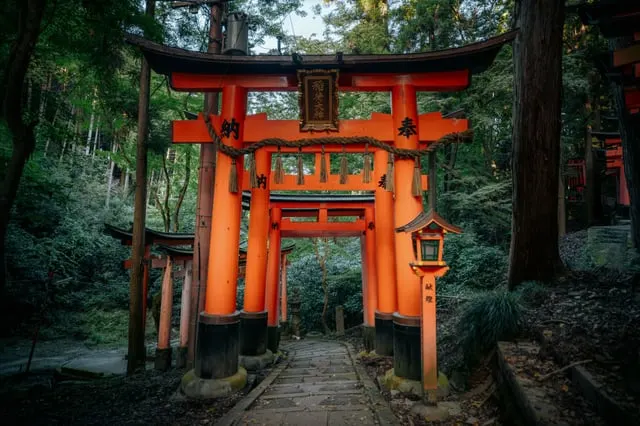
Kyoto was Japan's imperial capital for more than a thousand years, and its temples, gardens and wooden streets still shape the city. Wander the lanes of Gion, walk beneath the torii gates of Fushimi Inari and follow the Kamo River as it runs through the centre.
Maps and trail data © OpenStreetMap contributors (ODbL).
Three days in Kyoto give the southern and western temples, the old centre and the area around Kyoto Station a day each. Fushimi Inari Taisha, Kinkaku-ji and the Arashiyama Bamboo Grove come first; the second day moves from Ryoan-ji and Nishiki Market to the lanes of Gion and Kiyomizu-dera; the third goes from To-ji and Sanjusangendo to Nijo Castle. It suits a calm first visit.
Long weekend · 3 days · 2 adults ·
 1
 2
 3
 4
 5
 6
 7
16–21 min walk
10:16 Tofuku-ji · Morning · 60–90 minCity Bus 205 · about 54–70 min
12:26 Kinkaku-ji · Midday · 30–45 minRanden Arashiyama Main Line + Randen Kitano Line + Kyoto City Bus 59 · about 39–51 min
13:47 Iwatayama Monkey Park · Midday · 60–90 min13–17 min walk
15:00 Togetsukyo Bridge · Afternoon · 15–30 min10–13 min walk
15:25 Tenryu-ji · Afternoon · 60–90 min3–4 min walk
16:28 Arashiyama Bamboo Grove · Afternoon · 20–40 minAbout 6 min by taxi
09:42 Kitano Tenmangu · Morning · 45–75 minAbout 11 min by taxi
10:49 Nishiki Market · Morning · 30–60 min8–10 min walk
11:27 Pontocho · Morning · 20–40 min2–3 min walk
11:49 Kamo River riverside · Morning · 30–60 min8–10 min walk
12:27 Kennin-ji · Midday · 45–75 min4–5 min walk
13:16 Gion · Midday · 45–90 min5–7 min walk
14:06 Yasaka Shrine · Afternoon · 20–45 min9–12 min walk
14:35 Kodai-ji · Afternoon · 45–75 min7–9 min walk
15:27 Yasaka Koshindo · Afternoon · 10–25 min3–4 min walk
15:40 Higashiyama historic streets · Afternoon · 45–90 min8–10 min walk
16:33 Kiyomizu-dera · Afternoon · 1–2 hAbout 6 min by taxi
09:57 Honganji Temples · Morning · 45–90 min8–10 min walk
10:50 Kyoto Tower · Morning · 30–60 min17–22 min walk
11:37 Sanjusangendo · Morning · 30–60 min4–5 min walk
12:11 Kyoto National Museum · Midday · 1–2 hAbout 9 min by taxi
13:29 Kyoto International Manga Museum · Midday · 45–120 min17–22 min walk
14:31 Nijo Castle · Afternoon · 90–150 minFlights, car rental and airport transfers for your trip: 3 days · 1 adult.
We may earn a commission when you book through partner links, at no extra cost to you.
How Troovz stays freeFly from anywhere, to anywhere.
Pick an area, then a place that fits your budget and style.
We may earn a commission when you book through partner links, at no extra cost to you.
How Troovz stays freeUses cookies
Tours and tickets matched to your plan and interests. Tap the heart to save one for Build your own.
We may earn a commission when you book through partner links, at no extra cost to you.
How Troovz stays freeViator
Viator
Viator
Viator
Viator
Viator
Viator
Viator
Tours, day trips and more on Viator
Browse all toursOpen to visitors, with a few customs.
Temples
Temples are usually open to visitors, though inner shrines are often reserved for worshippers. Visitors are usually asked to dress modestly, with shoulders and knees covered, and to take their shoes off where asked, usually before prayer halls. Visitors usually keep their voices down and a respectful distance from altars and offerings, and photographing people praying usually needs their permission first. Rules can vary, so please follow any instructions and ask the staff on arrival.
What to sort before your 3-day trip, plus a few useful words.
We may earn a commission when you book through partner links, at no extra cost to you.
How Troovz stays freePlug type A, B
100 V, 60 Hz
Mobile data for your trip. Set it up before you fly.
per plan, one phone
See plans(opens in a new tab)Leave your bags for a few hours or a day.
per bag a day
Find storage(opens in a new tab)Tap to hear.
Places to eat near your plan and your stay. Tap the heart to save one.
Chosen from places featured in respected travel and food guides, or on a halal certifier's list, as of November 2026. We don't take payment to include a place.
Please confirm with the restaurant if you have any allergies.
 11 min from Gion
Warabi mochi · Higashiyama & Gion
Price level$$
Sources
Price level: Source: gion-tokuya.jp, checked Nov 2026
 21 min from Yasaka Koshindo
A5 wagyu ramen · Higashiyama & Gion
Price level$$$
Halal options
Sources
Halal options: Halal options available. Source: the restaurant's own menu. Please confirm locally.
Price level: Source: halal-shinjukutei.com, checked Nov 2026
 32 min from Togetsukyo Bridge
Tenzaru-zen (cold soba with tempura set) · Arashiyama & Sagano
Price level$$
Sources
Price level: Source: yoshimura-gr.com, checked Nov 2026
 42 min from Kyoto Tower
Egg sandwich · Kyoto Station & South
Price level$
Sources
Price level: Source: inoda-coffee.co.jp, checked Nov 2026
 52 min from Yasaka Shrine
A5 wagyu ramen · Higashiyama & Gion
Price level$$$
Halal options
Sources
Halal options: Halal options available. Source: the restaurant's own menu. Please confirm locally.
Price level: Source: halal-shinjukutei.com, checked Nov 2026
 62 min from Kamo River riverside
Cake set with coffee or tea · Central Kyoto & Kawaramachi
Price level$
Sources
Price level: Source: francois1934.com, checked Nov 2026
No places near your plan with this option
 26
Shimogamo Gozen · Northern Kyoto (Kamo, Kurama, Ohara)
Price level$$$$
Sources
Price level: Source: shimogamosaryo.co.jp, checked Nov 2026
 27
Warabi mochi · Northern Kyoto (Kamo, Kurama, Ohara)
Price level$$
Sources
Price level: Source: housendo.com, checked Nov 2026
 28
Omen (dipping udon) · Okazaki & Philosopher's Path
Price level$$
Gluten-free options
Sources
Gluten-free options: Source: the restaurant's own menu
Price level: Source: omen.co.jp, checked Nov 2026
 29
Kaiseki with the Hyotei egg · Okazaki & Philosopher's Path
Price level$$$$
Sources
Price level: Source: hyotei.co.jp, checked Nov 2026
Green escapes and the sea, a short trip from the centre. Planning information only.

Open public space
One card for most rides on public transport. Airport routes are in Flights.
One day of unlimited rides on all Kyoto City Subway lines and all Kyoto City Bus routes, plus some Kyoto Bus, Keihan Bus and West Japan JR Bus routes. It is valid on the day of first use only, not for 24 hours, and shows discounts at some museums and shops.
Per person, paid locally · as of November 2026
Your 3-day plan usesTram and metroBusesTaxi
Taxis in Kyoto run on a meter at a published tariff. A surcharge applies late in the evening, a booking fee applies when a car is booked by phone or app, and expressway tolls are extra. Airport rides can be pre-booked at a fixed fare per car. It helps to show your destination written in Japanese on your phone.
Typical costs, and how to pay.
Excluding your stay.
| Per person, per day | Budget | Mid-range | Comfort |
|---|---|---|---|
| Breakfast | JPY 509 | JPY 567 | JPY 4,600 |
| Lunch | JPY 821 | JPY 990 | JPY 7,467 |
| Dinner | JPY 990 | JPY 7,467 | JPY 10,992 |
| Drinks | JPY 366 | JPY 952 | JPY 1,608 |
| Getting around | JPY 1,100 | JPY 1,100 | JPY 3,235 |
| Sights (entry tickets) | JPY 2,467 | JPY 2,467 | JPY 2,467 |
| Total a day | JPY 6,253 | JPY 13,543 | JPY 30,369 |
Sights are counted at the standard entry ticket. Guided tours cost more.
Typical prices, as of November 2026
Cards are accepted at many hotels, shops and restaurants, but cash is still needed at many small restaurants, small shops and some sight entrances. Kyoto City buses and the subway do not take credit or debit cards for fares, so carry cash, an IC card or a pass.
ATMs run by banks are usually cheaper than stand-alone machines, though many banks also charge foreign cards a fee. If asked, choose to be charged in Japanese Yen. Your own bank may also charge a foreign-use fee. Check with your bank before you go.
Tipping is not customary in Japan and may be politely refused. Taxi fares are paid as shown on the meter.
Higashiyama & Gion
Seasons, weather, and the events and holidays that change opening hours, crowds and prices.
Quick answers to common questions.
Guides we read put the minimum at about 4 whole days, and one says at least 4 or 5 days. 2 to 3 days is possible if you must, but expect to skip sights. Staying longer leaves room for a day trip such as Nara. Arrival and departure days usually count for little. As of 8 Nov 2026.
Spring and autumn are usually the most popular times. Cherry blossom typically comes from late March to mid April, often peaking at the beginning of April, and autumn colours usually peak from mid November to early December. Summer is hot and humid, and the rainy season usually runs from early June to mid July. Golden Week, Obon and the New Year holidays are very busy across Japan, so book rooms early for those dates.
Kyoto has two subway lines and a wide city bus network. Subway fares run from JPY 220 to JPY 360 by distance, and the standard city bus fare in the central zone is JPY 230, paid when you get off at the front door, with no change given. City buses and the subway do not take credit or debit cards, so use an IC card, a day pass or coins. As of 5 Nov 2026.
Yes. The Subway and Bus One-Day Pass costs JPY 1,100 and is valid only on the day it is first used, and the Subway One-Day Pass costs JPY 800. An ICOCA pay-as-you-go card costs JPY 2,000 at a JR-West ticket machine, which includes a refundable deposit of JPY 500, and the machines take cash only for it. A pass pays off when you ride the subway and buses several times in a day. As of 5 Nov 2026.
Taxis run on a meter. One large operator's meter starts at JPY 470 and adds to the fare with distance, a surcharge of 20 percent applies late in the evening, and a booking fee of JPY 300 is added when a car is booked, with expressway tolls extra. Taxi apps such as GO and Uber connect you with licensed taxis. Tipping is not expected. As of 5 Nov 2026.
No. Tipping is not customary in Japan and may be politely refused. Taxi fares are paid as shown on the meter, and restaurants do not expect a tip.
Cards are accepted at many hotels, shops and restaurants, but cash is still the only option at many small restaurants, small shops and some sight entrances, and city buses and the subway do not take credit or debit cards. Many cash machines in Japan do not take cards issued abroad, but Seven Bank machines, found in convenience stores, take them every day of the year, and so do post office machines in their opening hours. Check your own card terms and fees before you travel. As of 5 Nov 2026.
Yes. Kyoto City charges a lodging tax per person per night, based on the room price per person, starting at JPY 200 for lower-priced rooms and rising in steps for more expensive ones. It is paid to the accommodation and is not part of the room price, so check whether your booking shows it separately. As of 5 Nov 2026.
Most of the well-known temples and museums sell tickets on the day, and several say no booking is needed, including Eikan-do, Sanzen-in, Kurama-dera and the Kyoto National Museum. At Nijo Castle, guides say the Honmaru Palace needs an advance reservation and an extra fee, so please confirm locally. Check each sight's page before you go, because special openings can have their own rules. As of 5 Nov 2026.
Japan uses plug types A and B, and Kyoto's mains supply is 100 V at 60 Hz. Many phone and laptop chargers accept this voltage, but visitors from countries with different sockets will need a plug adapter. Check the label on each charger: if it lists a range that includes this voltage, only the plug shape needs changing.
Japanese is the everyday language, and English is not widely spoken, so a few Japanese words and a translation app are useful. The latest EF English Proficiency Index ranks Japan number 96 and gives Kyoto a score of 461, where a higher score means stronger English. The phrases section lists some words to try. As of 5 Nov 2026.
Much of the city costs little to enjoy on foot: Fushimi Inari, Yasaka Shrine and the Gion and Higashiyama streets are free to walk. The main costs are entry tickets and meals. For an adult, Kinkaku-ji costs JPY 500, Ginkaku-ji JPY 1,000 and the Tenryu-ji garden JPY 500, and a one-day subway and bus pass costs JPY 1,100. Food and getting around come to about JPY 3,787 a day on a budget and about JPY 11,075 a day mid-range, before sights. As of 5 Nov 2026.
Many sights within one area, such as Gion and the Higashiyama streets, can be walked, and the subway, city buses and trains cover the rest. Kinkaku-ji has no railway station nearby and is reached by city bus, while Fushimi Inari has its own stop on the JR Nara Line. A one-day subway and bus pass costs JPY 1,100, and taxis and apps such as GO and Uber are an option for short rides. As of 5 Nov 2026.
Walking is the main free pleasure. Fushimi Inari, Yasaka Shrine and the grounds of Heian Shrine are free to enter, and the Gion and Higashiyama streets, the Philosopher's Path, the Kamo River riverside and the Arashiyama Bamboo Grove are open public space. Nishiki Market is free to walk through, and you pay only for what you buy.
Nara is usually about 50 minutes by train from Kyoto Station, and Uji, with its Byodo-in temple, is about 17 minutes by the JR Nara Line. Both need a few hours once you arrive, so they work well as half-day or full-day outings. As of 5 Nov 2026.
Fushimi Inari is free to enter. Kinkaku-ji costs JPY 500 for an adult, Ginkaku-ji JPY 1,000 and the Tenryu-ji garden JPY 500. Nijo Castle's castle-grounds ticket costs JPY 800 for an adult. For Kiyomizu-dera the operator's pages state no adult price in text, so check the fee on arrival. Eikan-do sells tickets on the day, valid that day only. As of 5 Nov 2026.
There is no strict dress code, but neat, appropriate clothes show respect. In temple buildings you may have to take off your shoes, so wear socks. Photography is usually fine on the grounds but often not allowed inside buildings, so look for signs, and some sights have their own rules: Kinkaku-ji limits photography to personal snapshots, and Kiyomizu-dera and Fushimi Inari ask you not to eat while walking. At a shrine, keep to the side of the approach path and behave calmly.
Three days cover the main districts, but the guides we read put the minimum at about 4 whole days, so expect to leave some sights for another visit. Starting early and grouping stops by district helps. As of 8 Nov 2026.
Three days cover the south and west of the city, the old centre and eastern hills, and the temples around Kyoto Station: Fushimi Inari Taisha, Kinkaku-ji, Arashiyama, Gion, Kiyomizu-dera, To-ji, Sanjusangendo and Nijo Castle are all on the plan. The Plan at a glance box shows the entry total.
Average highAverage lowRainy days
Typical, based on past years. Not a forecast.
| Month | Average high | Average low | Rainy days |
|---|---|---|---|
| January | 7° | 0° | 10 days |
| January is one of the two coldest months, with many clear, dry days, and snow is uncommon and rarely settles. Many businesses close for some days between 29 December and 4 January. The Toka Ebisu festival at Ebisu Shrine usually runs from 8 to 12 January. | |||
| February | 8° | 0° | 11 days |
| February is still cold, one of the two coldest months, with clear skies common. Setsubun, usually on 2 or 3 February, brings bean-scattering and demon-expelling rites at shrines and temples, and the Kyoto Marathon is on Sunday 21 February 2027. | |||
| March | 12° | 3° | 14 days |
| March is still chilly early in the month and warms up from the middle of March, so layers are the practical choice. Plum blossom comes first, then cherry blossom, which often starts from mid to late March. The Doll Festival on 3 March has a doll-floating ritual at Shimogamo Shrine. | |||
| April | 18° | 8° | 12 days |
| April has mild days with cooler mornings and evenings. Cherry blossom often peaks at the beginning of the month, so popular blossom spots are busy then. The geiko and maiko spring dances run through the month. | |||
| May | 23° | 13° | 12 days |
| May is fully spring, mild by day and still chilly in the mornings and evenings, so a light jacket helps. Golden Week, from 29 April to 5 May in 2027, is very crowded, and the Aoi Matsuri procession is on 15 May. | |||
| June | 26° | 18° | 15 days |
| June is warm and humid, and the rainy season usually begins in early June, so carry a compact umbrella and light clothing. Hydrangeas bloom around the city in June and July, and many shrines hold summer purification rites that usually end on 30 June. | |||
| July | 30° | 22° | 19 days |
| July is hot and humid, and the rainy season usually ends by mid July. Gion Matsuri fills the whole month, with the main float processions on 17 and 24 July and street festival evenings before each, so bring light, breathable clothes and drink water often. | |||
| August | 31° | 23° | 15 days |
| August is among the hottest months, humid, with sudden afternoon downpours possible, so plan outdoor sightseeing for mornings and take breaks in air-conditioned places. Obon in mid August is one of Japan's busiest travel periods, and on the evening of 16 August five bonfires are lit on the hills around the city. | |||
| September | 27° | 19° | 13 days |
| September stays hot and humid for much of the month and cools gradually. It is typhoon season, so keep indoor options ready. Moon-viewing evenings at shrines and temples take place around the full moon. | |||
| October | 21° | 13° | 10 days |
| October is mild by day, with chilly mornings and evenings, so a light jacket or easy layers work well, and leaves begin to change near the end of the month. Jidai Matsuri parades through the city on 22 October, and the Kurama Fire Festival is held the same evening in Kurama village, north of the city. | |||
| November | 16° | 7° | 8 days |
| November cools down, with chilly mornings and nights, so bring a jacket or coat and layers. Autumn colours usually peak from mid November to early December, and many temples open for evening illuminations, so popular places are busy and the official tourism site offers quieter-area routes. | |||
| December | 10° | 2° | 9 days |
| December is cold, with many clear days and little rain or snow, so the air can be dry. Some autumn evening illuminations continue into early December, and many businesses close for some days around the New Year holiday, between 29 December and 4 January. | |||
Coming up in the next 12 months. to see what falls during your trip.
From late October to mid December temples such as Kodai-ji, Shoren-in, Kitano Tenmangu, Chion-in and Eikando open in the evening for the autumn colour. Evening entry is paid at each site, and the busiest sites are crowded after dark.
Many shops, restaurants and attractions close for one or more days between 29 December and 4 January, especially on 1 January. Shrines are busy with first visits of the year in the first days of January.
On 1 to 3 January people make their first shrine and temple visit of the year, including at Fushimi Inari Taisha. The most popular places are crowded, with queues of more than an hour, so allow extra time.